About
Scientific Machine Learning · Trustworthy AI · Earth & Environmental Systems
U.S. Department of Energy Marine Energy Postgraduate Fellow
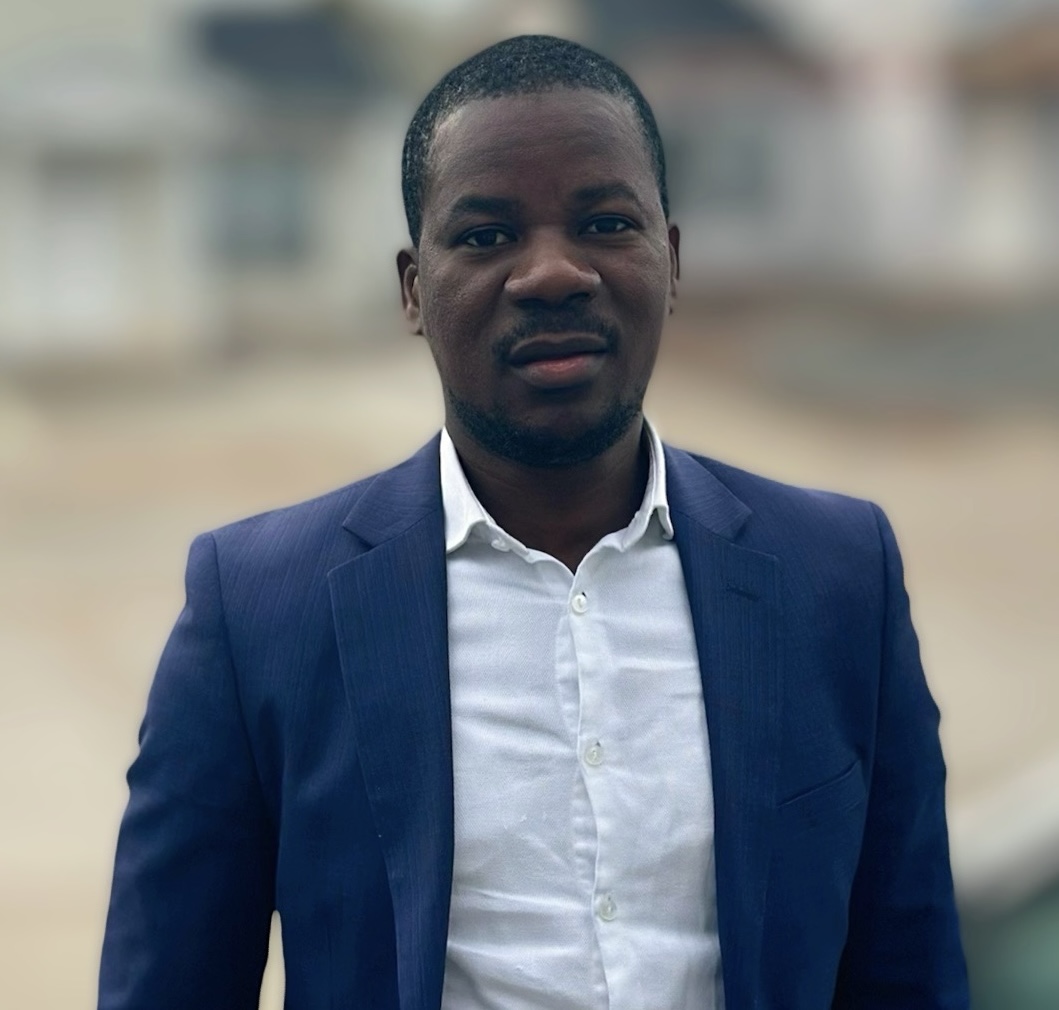
Olanrewaju (Ola) Muili is a research engineer and machine-learning researcher working across scientific machine learning, trustworthy AI, and Earth and environmental systems.
His scientific foundation is in the Earth and environmental sciences. He holds an M.S. in Geosciences (Georgia State University) and a B.S. in Geology, and began his career as an exploration geologist building 3D geological models and data-intensive workflows for resource projects. That training — reasoning under uncertainty, quality-controlling messy observational data, and documenting decisions defensibly — runs through everything he builds today.
That foundation shows up directly in his scientific ML work: peer-reviewed research on sinkhole susceptibility using machine learning (Applied Computing and Geosciences, 2025), extended into the Karst Intelligence Agent decision-support system; and a reproducible Hurricane Florence rainfall–runoff reconstruction for a North Carolina coastal-plain watershed, combining USGS watershed delineation, NOAA MRMS precipitation processing, discharge quality control, and HEC-HMS event modeling.
As a U.S. Department of Energy Marine Energy Postgraduate Fellow, he worked as a research engineer with Deep Anchor Solutions, leading development of reproducible finite-element workflows for marine-energy anchoring systems and generating 5,000+ numerical simulation runs for simulation-to-ML research.
He builds his research in the open: TraceVox Research is his open environment for reproducible RL and trustworthy-AI experiments, and TraceVox AI is the production observability and evaluation platform that grew out of the same interest in inspectable AI behavior. His published work includes a peer-reviewed machine-learning study in Applied Computing and Geosciences (2025) and a sole-authored LLM safety preprint (SSRN, 2026).
Education
- University of Colorado Boulder — M.S. Computer Science
- Georgia State University — M.S. Geosciences
- University of Ibadan — B.S. Geology
What I work toward
Machine-learning systems for scientific and environmental problems that are reliable, inspectable, and honestly evaluated — whether the uncertainty comes from corrupted observations, distribution shift, adversarial pressure, or the messy measurement realities of real-world Earth systems. I pair that with the engineering discipline to make experiments reproducible and results verifiable.